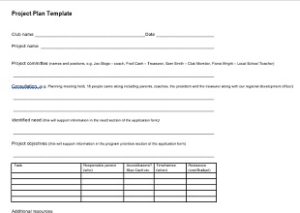
Most event plans fail on one of two numbers: the floor area the venue actually has, and the headcount the caterer is going to bill you for. Neither is obvious until it is too late to change, and neither appeared anywhere on the previous version of this page. So the templates are below, and so is the arithmetic that tells you whether the plan fits.
- 13Event plan layouts
- EditableAdapt and print
- Any sizeFigures that scale
- FreeNo sign-up, no email
An event plan is one of three documents
These get merged into a single file and then fail on the day, because they are read by different people at different times.
| Document | What it holds | Who reads it, and when |
|---|---|---|
| Event plan — this page | The decisions. Date, venue, headcount, budget, format, who is responsible for what. | You and whoever is paying, weeks or months out. Changes rarely, and every change costs money. |
| Event checklist | The tasks that follow from those decisions, each with an owner and a date. | The people doing the work, continuously, until the day. |
| Run sheet | The day itself, in minutes. Doors at 18:30, speeches at 19:45, who gives the signal. | Everyone on the day, and nobody before it. Closer to a meeting agenda than to a plan. |
The plan is the document that answers “can we afford this and does it fit”. If you find yourself writing times of day into it, you have started the run sheet and should start a second file.
Free event plan templates
Thirteen layouts. Download the closest and cut what you do not need — an event plan that carries sections nobody fills in gets ignored.


Seating doubles the floor space you need
This is the first decision most people make and the one they are least likely to have costed. Typical hire guidance allows roughly the following per guest:
| Layout | Per guest | 120 guests |
|---|---|---|
| Standing reception | 0.75 m² | 90 m² |
| Theatre seating, rows of chairs | 1.0 m² | 120 m² |
| Conference, seated at tables | 1.2 m² | 144 m² |
| Banquet, round tables | 1.5 m² | 180 m² |
The ratio is the point. Going from a standing reception to a seated dinner for the same guests takes exactly twice the floor area, because 1.5 divided by 0.75 is 2. Nothing about the guest list changed. The venue requirement did, and so did its price.
Then there are the things that are not guests but still take floor:
- Dance floor — about 3 m by 3 m for every 15 to 20 people dancing at once, which is never the whole guest list.
- Bar — about 3 m by 3 m per bar section.
- Buffet — about 3 m by 2 m per 50 guests, plus the queue, which is the part everyone forgets.
For 120 seated guests with a dance floor, one bar and a buffet, that is 180 plus 18 plus 9 plus 14.4, or about 221 m² — nearly two and a half times the standing figure. Put that number in the plan before you look at venues, not after, and treat any licensed venue’s own stated capacity as final regardless of what the arithmetic says.
The table count is a second decision hiding inside the first
Guests per table is usually treated as a detail and it is not. Take the same 120 guests:
| Guests per table | Tables needed | What else that changes |
|---|---|---|
| 10 | 12 | — |
| 8 | 15 | Three more tables, three more linens, three more centrepieces. |
Seating eight rather than ten is more comfortable and makes conversation easier, and it costs three extra table hires and three extra sets of everything that goes on a table. That is a decision worth making deliberately in the plan rather than discovering when the florist quotes for fifteen arrangements.
Three different headcounts, and only one of them is the bill
First-time planners generally do not know there are three, which is where the money goes.
-
Invited
The number on the guest list. Useful only for ordering invitations and for the venue’s upper bound. Never use it to order food.
-
Replied
The RSVPs you have back. Always lower than attendance for informal events, because people who meant to reply still turn up, and sometimes higher for formal ones. It is a working figure, not a final one.
-
Guaranteed
The number you confirm to the caterer by their deadline. This is what you pay for, whether or not those people arrive. It is the only one of the three that is a financial commitment, and it is the figure that belongs in your plan next to the catering cost.
Worked through: guarantee covers for 100, 85 people come, and at 40 a head you have paid 600 for food nobody ate — an illustration, but the shape of it is what happens. Ask your venue what no-show rate they actually see for events like yours; they will know, and a real figure from them beats any rule of thumb from a web page. Then hold the catering cost against the rest of the budget rather than treating it as a separate problem.
On the budget: if venue and catering together are 60% of your total, then a 10% overrun on just those two is 6% of the whole event. That is the number a contingency has to absorb, and it is why a contingency sized against the whole budget rather than against the big line items tends to be too small.
Dietary requirements are a count, not a courtesy
Collect them with the RSVP, in a field people have to answer, and carry the totals into the plan as numbers. Guessing does not work and asking on the day is too late for the kitchen.
Separate two things that often get listed together. Allergies and intolerances are a safety matter — nuts, shellfish, gluten and dairy among them — and need to reach the kitchen as a named requirement for a named guest, not as a tally. Dietary and religious requirements — vegetarian, vegan, halal, kosher and others — are a count, and the caterer needs to know whether they can be prepared on site or must be brought in, because the answer changes the price and sometimes the supplier. Ask rather than assume which applies.
Do not list “non-vegetarian” as a requirement. It is the default, and treating it as a category is how the real requirements end up uncounted.
Work backwards from the longest lead time
The sequence people naturally plan in — date, then venue, then everything else — is the wrong way round when one item takes much longer to arrange than the rest.
-
List what has to be booked, with its lead time
Ask each supplier how far ahead they need to be confirmed. Do not estimate it. Venues, caterers and anything printed are usually the long ones; the figure differs enormously between a company seminar and a wedding, which is why no single rule covers both.
-
Find the longest one and count back from your date
That item sets your real deadline for the decisions it depends on. If the venue needs twelve weeks and the venue needs a headcount, your headcount deadline is twelve weeks out, not two.
-
Work out what blocks what
Invitations cannot go out before the venue is confirmed; catering cannot be ordered before the RSVPs are in; the seating plan cannot be drawn before both. Writing the dependencies down is what turns a list of tasks into a workable schedule with owners.
-
Name one person per section, and one for the day
Split the work into sections — venue, catering, invitations, programme — with one named owner each. Then name a single person who makes decisions on the day. Shared responsibility works in the planning and fails completely at 18:25 when something is wrong and nobody can authorise a fix.
How detailed should an event plan be?
Detailed enough that someone else could run the event from it, and no more. The test is whether every line is a decision with a consequence — a cost, a date, a named person. Lines that merely describe an intention belong in the checklist. A plan that runs past a couple of pages is usually three documents in one file.
When do I stop changing the plan?
At the catering guarantee deadline, in practice, because that is the point at which the headcount stops being adjustable and becomes a bill. Changes after that are still possible but they cost money rather than effort. Mark that date in the plan itself so everyone can see the cliff coming.
Where do important guests sit?
Near whatever they are there for. If there are speeches, that means within clear sight of the speaker rather than simply at the front — a front table facing the wrong way is worse than a middle one facing right. Decide this against the actual floor plan with the screen, lectern and any pillars marked, not against a sketch of tables, and seat together the people who came to see each other.
Do I need both an event plan and a budget?
They can share a file for a small event, and should not for anything larger. The budget changes constantly as quotes arrive, while the plan should be stable — so a combined document is either a plan being edited too often or a budget that has stopped being updated. Keep the plan’s figures as agreed totals and keep the working arithmetic separately.
What is the most common planning mistake?
Costing the venue for a standing reception and then deciding to seat everyone, which as shown above doubles the floor area required. The second most common is treating the RSVP count as the catering count. Both are decided early, both are hard to reverse, and neither shows up as a problem until the quotes come back.
How do I plan for weather at an outdoor event?
Write the wet-weather option into the plan as a decision with a deadline and a cost, not as a hope. That means knowing what the alternative space is, whether it holds the same headcount under the seated figure rather than the standing one, who decides, and by when the marquee or hall has to be confirmed. An outdoor event without a dated fallback is an outdoor event with no plan for the most likely thing to go wrong.
Can one template cover a wedding and a conference?
The structure can, because both need a date, a venue, a headcount, a budget and owners. The sections underneath differ completely — a conference plan needs a programme, speakers and audio-visual requirements; a wedding plan needs a ceremony, a running order and family logistics. Take whichever of the layouts above is closest and delete hard rather than trying to keep every heading.
If the event involves printed invitations, design them once the venue and date are locked and not before — the party flyer templates are a quick way to produce something to hand out, and reprinting because a detail changed is an avoidable cost.