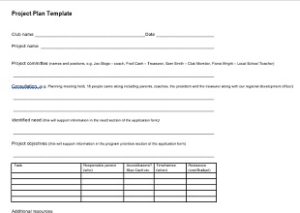
Most lesson plan templates give you boxes to fill in and no help with the two things that actually make a plan work: writing an objective you can tell whether you met, and being honest about how much time you really have. The layouts are below. The rest of this page is those two problems, because a beautifully completed form for a lesson that overran by fifteen minutes and taught something nobody can assess is just paperwork.
- 14Lesson plan layouts
- WordEditable documents
- Any phaseAdapt to your class
- FreeNo sign-up, no email
Three documents, three timescales
These get conflated, and the symptom is a teacher trying to fit a term’s planning onto a one-lesson form.
| Document | Covers | Holds |
|---|---|---|
| Curriculum map | A year, or a whole key stage. | What is taught when, across the year, so that topics arrive in a sensible order and nothing is taught twice or not at all. |
| Scheme of work | A unit or a term. | The sequence of lessons, the assessment points, and the resources needed. This is where the arithmetic further down belongs. |
| Lesson plan — this page | One session. | The objective, the sequence of activities with timings, what the class needs, and how you will know whether it worked. |
The practical test: if what you are writing would be the same next year, it is not a lesson plan. A lesson plan is the version adapted to the class in front of you, which is why the useful ones are short. The scheme of work is the one that benefits from being treated as a sequence with dates, because that is what it is.
Free lesson plan templates
Fourteen Word documents. Take the one with the fewest boxes you can live with — a form that asks for more than you will fill in gets abandoned by week three. Whichever you pick, make sure it has a line for resources: printed grids from the graph paper templates or ten frames for early number work are exactly the things that get remembered five minutes before the class arrives.


Write the objective so you can tell whether you met it
“Students will understand photosynthesis” is the commonest objective on the commonest lesson plan, and it cannot be assessed. Understanding is not observable. At the end of the lesson there is no action you can watch that tells you whether it happened.
The fix is to choose a verb that names something a student does. The standard tool for that is the revised Bloom’s taxonomy — Anderson and Krathwohl’s 2001 revision of Bloom’s original — which arranges cognitive demand in six levels:
| Revised (2001) | Originally called | An objective at this level |
|---|---|---|
| Remember | Knowledge | List the stages of the water cycle. |
| Understand | Comprehension | Explain in your own words why the kettle lid steams. |
| Apply | Application | Use the formula to work out the area of this room. |
| Analyze | Analysis | Compare the two accounts and identify where they disagree. |
| Evaluate | Evaluation — which was the top level | Judge which of these two methods is better here, and say why. |
| Create | Synthesis — which was fifth | Design an experiment that would test this. |
Two things are worth noticing in that table. All six levels were renamed in the revision, mostly from nouns to verbs, which was the point — the levels describe things learners do. And the top two swapped places: in the original, evaluation was the most complex level, while the revision puts create (formerly synthesis) at the top and moves evaluation to fifth.
The practical consequence for a plan is that the verb and the assessment have to agree. An objective that says “list” cannot be assessed by a discussion, and one that says “design” cannot be assessed by a quiz. If the two halves of your plan disagree, one of them is wrong — and it is usually the assessment, because it was written last and in a hurry.
Plan the assessment before the activities
That last point generalises into the most useful planning habit there is. Grant Wiggins and Jay McTighe’s Understanding by Design sets out three stages, in this order:
-
Identify desired results
What should the class know or be able to do at the end? This is the objective, written with a verb you can observe, as above.
-
Determine acceptable evidence
What would convince you it happened? Decide this before you plan a single activity. It can be a question on the way out, a piece of work, a show of hands — but decide what it is, because it is the only thing that tells you whether to move on.
-
Plan learning experiences and instruction
Only now choose the activities, and choose them because they produce the evidence you just specified. Activities picked first tend to be picked because they work well, which is not the same as because they teach this.
The order is the reverse of how most people plan, which is to start from an activity or from the content to be covered. The named alternative is what the approach was written against: plan from the activity and you get a lesson that went nicely; plan from coverage and you get a lesson that got through the material. Neither tells you whether anyone learned the thing.
You have less time than the timetable says
This is the arithmetic nobody does, and it explains more about courses running out of time than anything else.
One lesson. Take a 60-minute period. Count the transitions — settling at the start, getting materials out, moving between activities, packing away. Four of them at three minutes each is 12 minutes gone, a fifth of the hour, leaving 48 minutes of teaching. So a plan with sixty minutes of content in a sixty-minute slot is a plan to overrun by a quarter, every lesson, and the thing that gets dropped is whatever was at the end — which is usually the bit where you find out whether it worked.
One term. Now scale it up, for a twelve-week term with three lessons a week:
| Lessons | |
|---|---|
| 12 weeks × 3 a week | 36 scheduled |
| Less assessment | 33 |
| Less two days lost to closures, trips or absence | 31 usable |
| Less 10% held in reserve for overrun and reteaching | 27 content lessons |
So a scheme of work with 34 topics in it is seven lessons short before the term has started. That shortfall is not discovered in week one. It is discovered in week ten, when there is no way to fix it except to rush the last topics — which are frequently the hardest ones, because sequencing puts them last.
And the headline figure, combining both calculations: the timetable appears to offer 36 hours of teaching. The real figure, after transitions and lost days, is about 24.8 hours. A 31% gap. Plan against the second number. Those four reserve lessons are the most valuable thing in the scheme of work, and the discipline is not to spend them in September.
Mapping the term onto an actual calendar rather than a count of weeks is what makes the lost days visible — the monthly calendar templates are the quickest way to see which lessons fall on which dates, and which ones fall on a day the school is shut.
The opening is the part that earns the rest
The previous version of this page advised skipping “boring introductions”. That is worth contradicting directly, because the opening is doing two jobs that nothing later in the lesson can do.
It tells the class what the session is for, which is what lets them tell the important parts from the incidental ones. And it connects today to what they already know, which is what gives the new material somewhere to attach. A lesson that opens by getting straight into content is a lesson where some of the class spend the first ten minutes working out what they are supposed to be getting from it.
None of which requires it to be long. Two sentences of objective and one question about last lesson is enough, and it fits inside the 48 minutes. What makes an opening boring is length and repetition, not the fact of having one — and the fix for that is to vary it, not to drop it.
How detailed should a lesson plan be?
Detailed enough to teach from, which for an experienced teacher on familiar material is remarkably little — an objective, a sequence with timings, and the assessment. The detail goes up when the material is new to you, when someone else might have to cover the lesson, or when the plan is being observed. A plan written to a level of detail you will not sustain is a plan you will stop writing, and no plan is worse than a short one.
Do I need a separate plan for every lesson?
A separate objective and assessment, yes. A separate document, often not — many teachers plan a week on one sheet with a row per lesson, which keeps the sequence visible and is faster. What does not work is one plan covering several lessons with a single shared objective, because then nothing tells you whether to move on at the end of any individual session.
What if the lesson does not go to plan?
Write on it. A plan annotated with what actually happened — where the class got stuck, what took twice as long, what you cut — is worth more next year than a clean one, and it is the only record of why the reserve lessons got used. The temptation is to file the tidy version; the useful version is the one with pencil on it.
How do I plan for a wide range of ability?
Plan one objective and more than one route to the evidence. The taxonomy above helps here: the same topic can be assessed at “explain” for some of the class and at “evaluate” or “design” for others, without needing two lessons. What tends not to work is a different objective per group, because it multiplies the planning and leaves you unable to tell whether the lesson worked.
Where do tests go in the plan?
Into the scheme of work at the start of the term, with dates, which is the one genuine advantage of planning a term in advance. The calculation above sets aside three lessons for assessment out of thirty-six; decide where they fall before you need them, tell the class, and they are a fixed point everyone plans around rather than something that eats a content lesson at short notice.
What should a student who missed a lesson be given?
The objective and the assessment, which between them say what the lesson was for and what they need to be able to do — far more useful than a copy of the activities. This is the real benefit of a written plan for absence: it makes catching up specific instead of vague. Keeping the attendance record alongside the plan means you can see at a glance which lessons a particular student needs rather than reconstructing it.
Are these templates suitable for home schooling?
The structure transfers directly, and the term arithmetic above matters more rather than less, because there is no timetable imposing the discipline. The transitions figure changes — fewer pupils usually means shorter settling time — so count your own rather than using the twelve minutes above. The objective-and-evidence habit is the part worth taking wholesale.
One last habit worth the thirty seconds it costs: keep a short checklist of everything that has to be ready before the class walks in, and run the plan against it the evening before. The resource you forget is reliably the one the lesson was built around.