
Twenty-nine free prenuptial agreement templates to download and edit. A prenup sets out how property and debts would be handled if a marriage ends — but there are limits on what one can decide, and several ways a court can set one aside. Both are below the downloads.
This is general information, not legal advice, and a prenup is not a document to finalise from a template. Family law varies enormously between countries and between states, and in some places prenuptial agreements are not automatically binding at all. Whether an agreement holds depends heavily on how it was made, not just what it says. Use a template to understand the structure and prepare for the conversation — then have a family lawyer draft or review the actual agreement. Each partner should take their own independent advice.
- Templates29 versions
- FormatWord and PDF, supplied zipped
- Opens inWord, Google Docs, LibreOffice
- CostFree, no signup
What a prenup can and cannot cover
This is the part that is most often got wrong, and getting it wrong can undermine the whole agreement.
| Generally can cover | Generally cannot |
|---|---|
| Property each partner brings into the marriage, and what stays separate | Child custody and child support. Courts decide these on the child’s best interests at the time, and are not bound by what the parents agreed years earlier |
| How property acquired during the marriage would be treated | Anything unconscionable, or terms so one-sided that enforcing them would leave one partner destitute |
| Debts, including protecting one partner from the other’s | Personal or lifestyle clauses — housework, weight, frequency of contact with in-laws. Frequently unenforceable and can weaken the document |
| Business interests, and what happens to a stake on divorce | Penalties for infidelity. Widely unenforceable, and in many places courts will not consider conduct in financial division at all |
| What happens to assets on death, alongside a will | Anything that incentivises divorce |
| Spousal maintenance, in many though not all jurisdictions | Terms agreed under pressure, or without both partners understanding them |
If children are a concern — and for many couples with children from earlier relationships, they are the reason for the agreement — what a prenup can properly do is address property intended for those children. The arrangements for the children themselves belong in a different conversation, with a family lawyer.
The templates
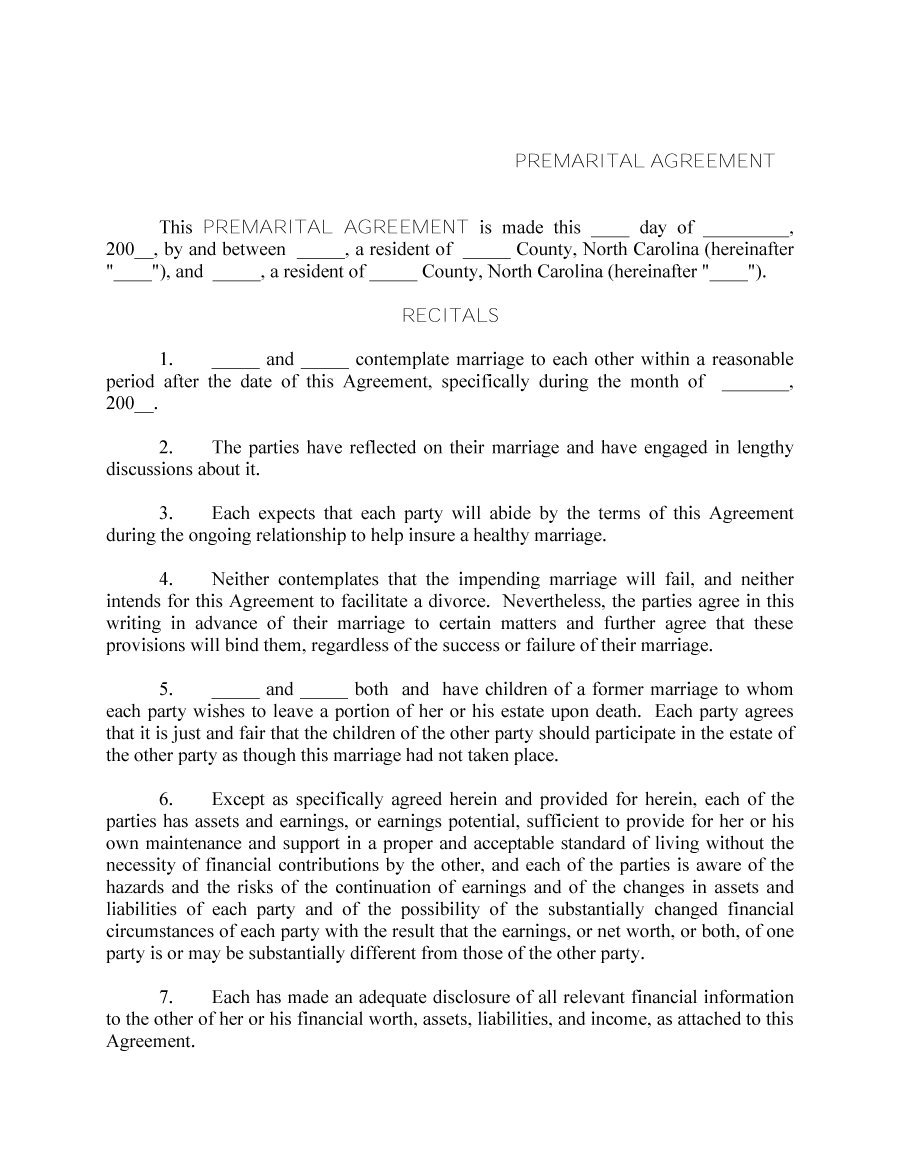
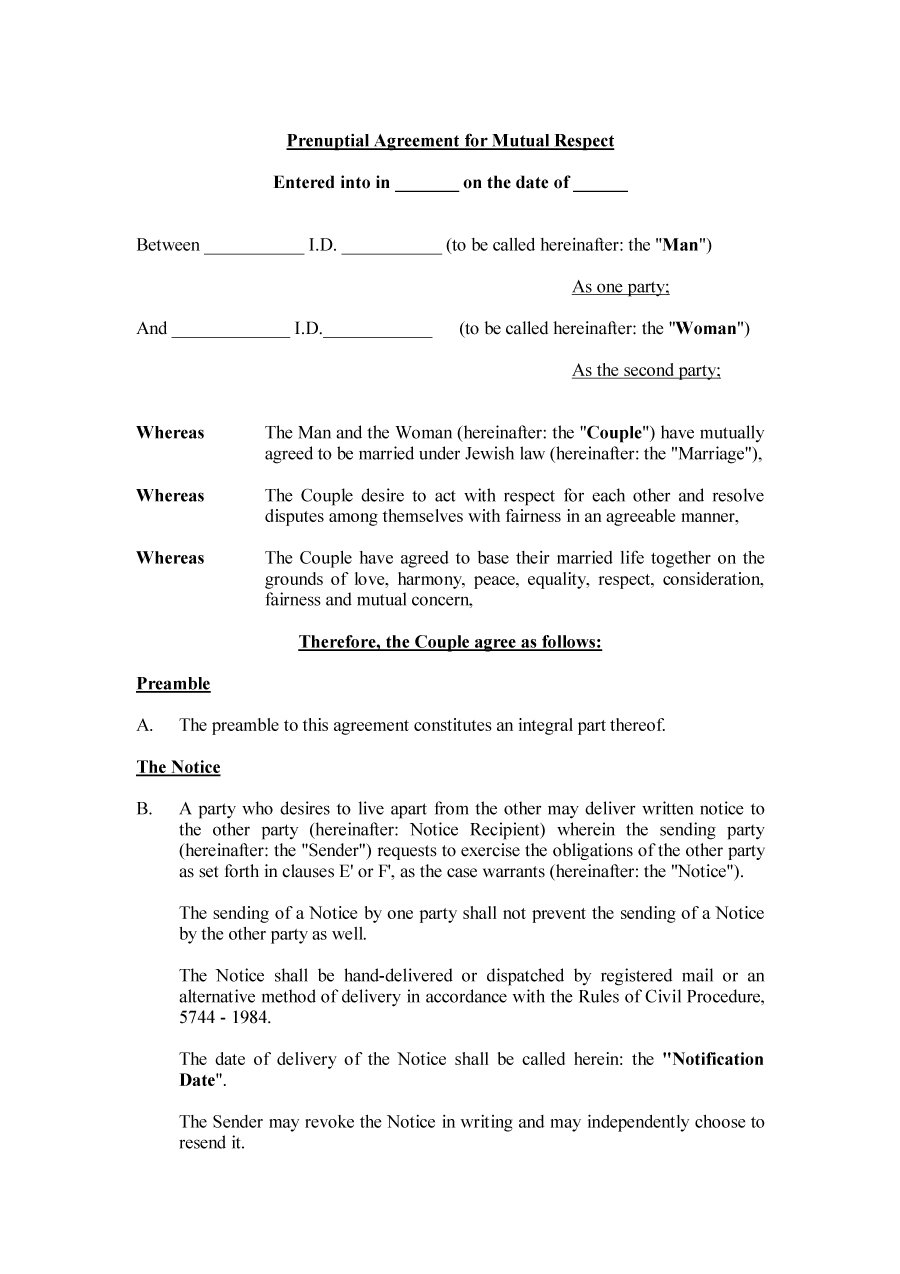
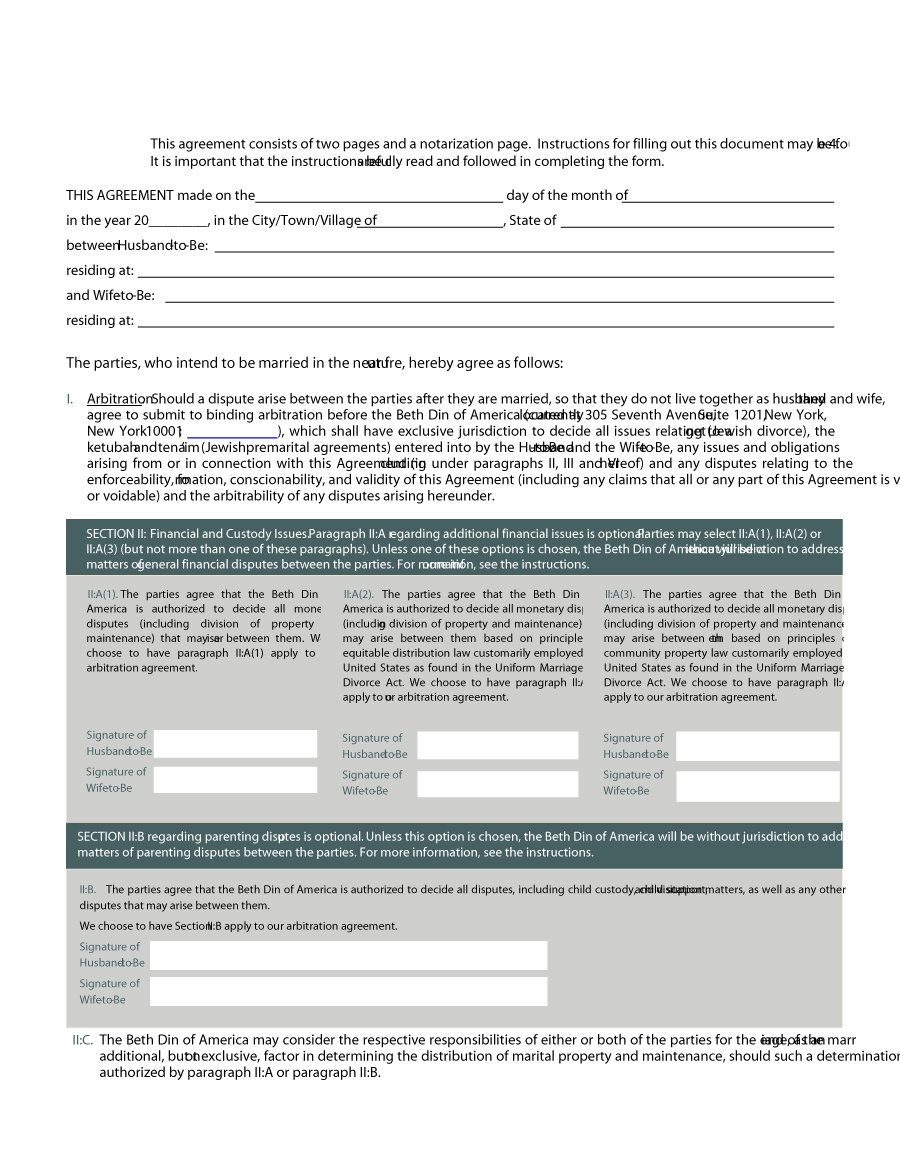
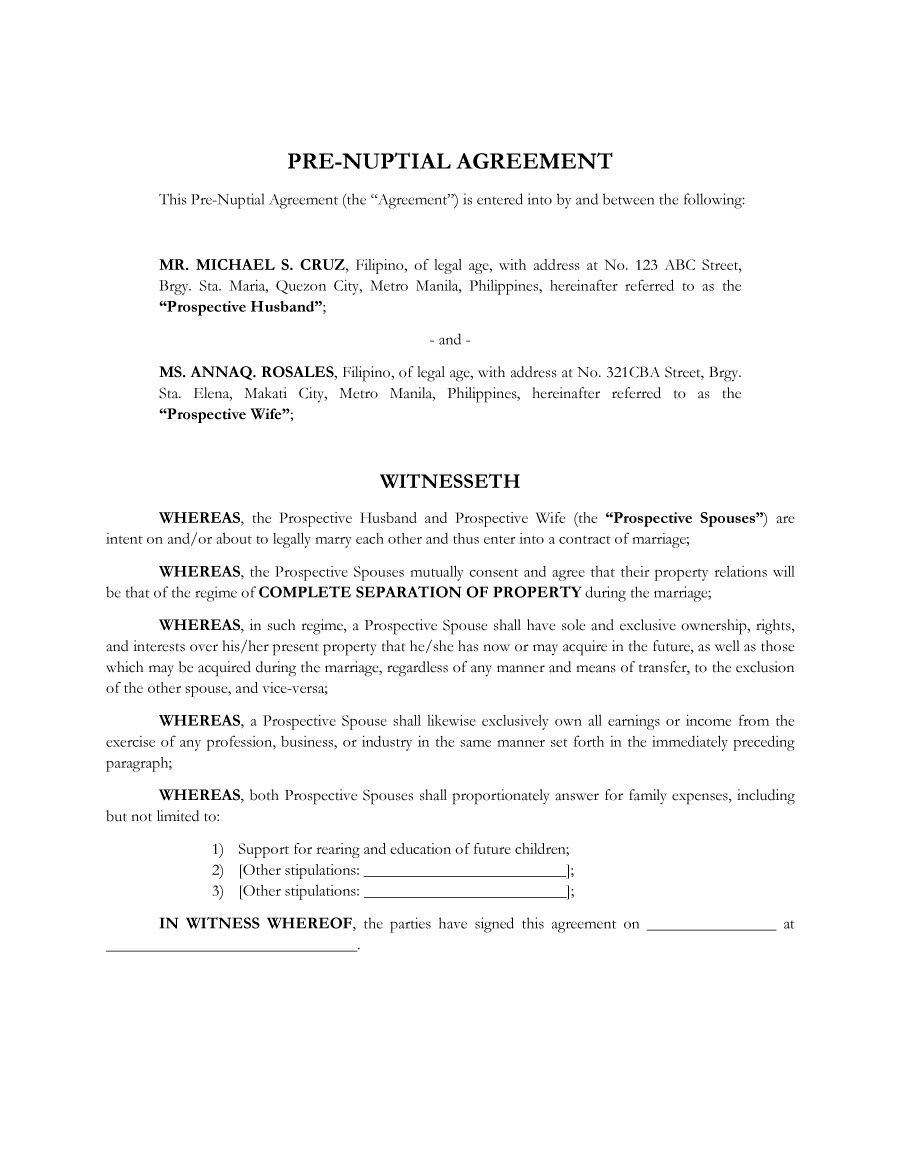
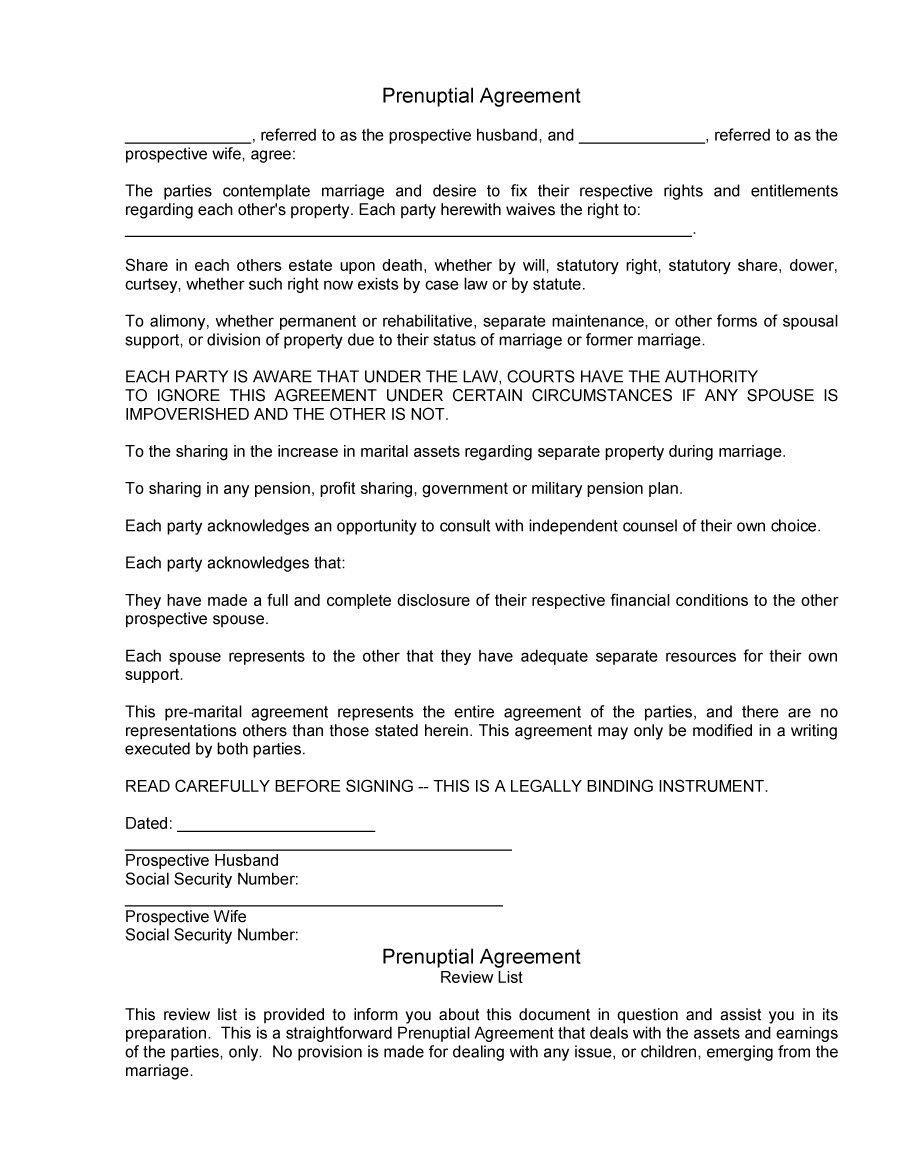
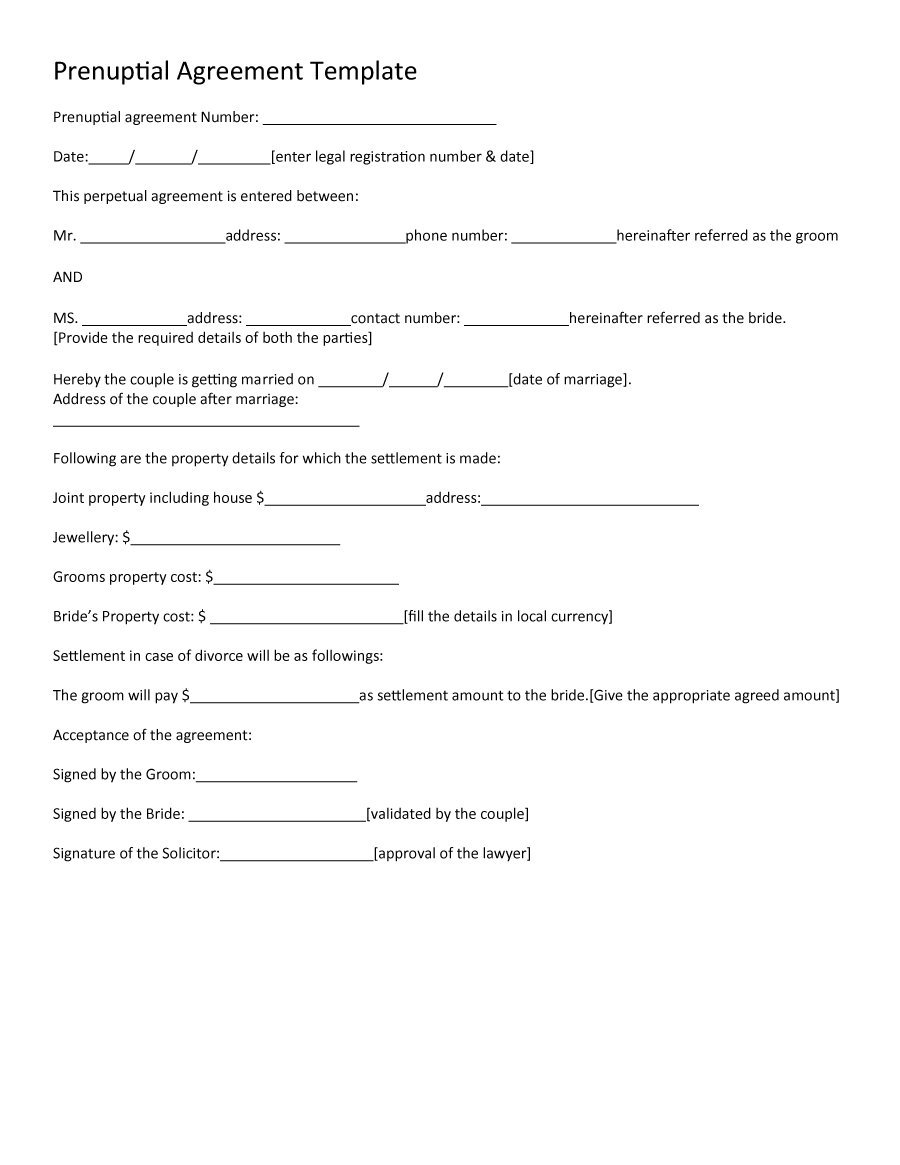
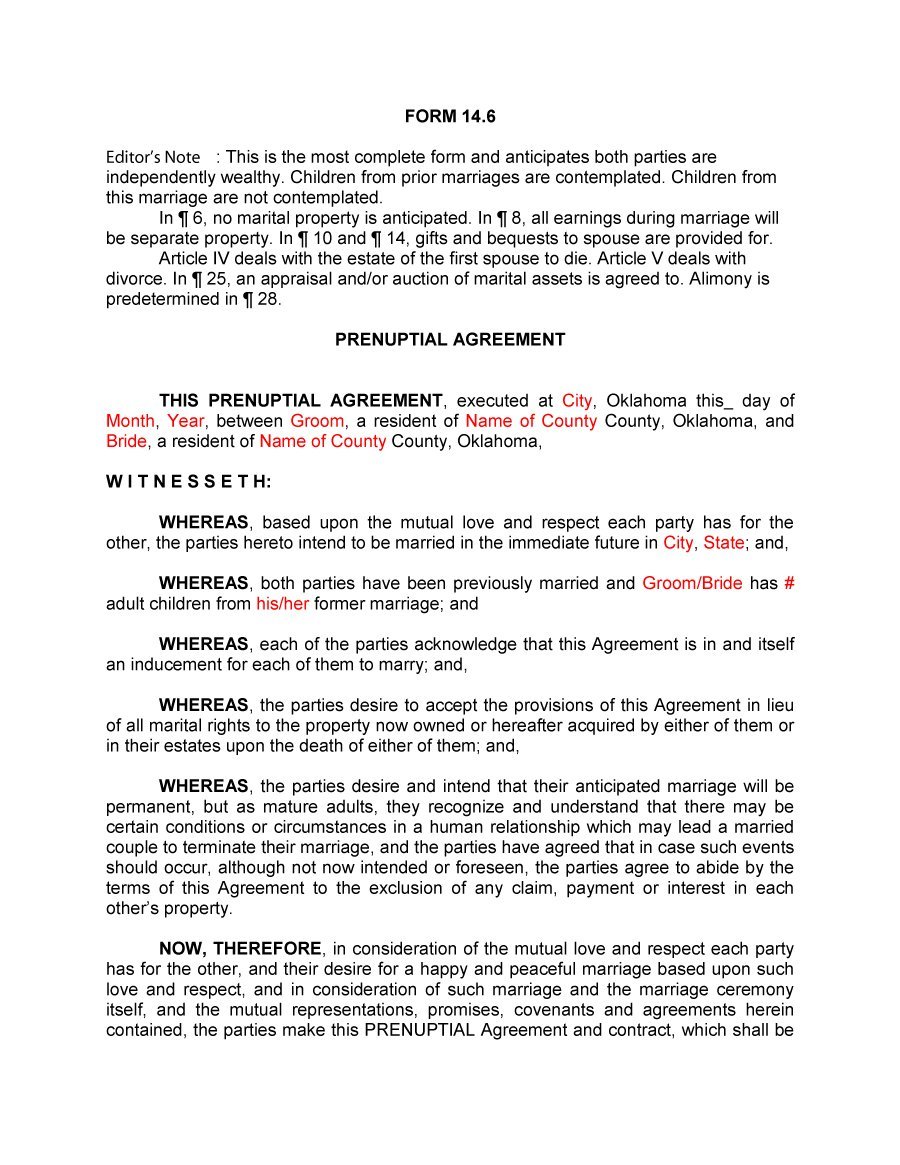
Twenty-nine versions covering different levels of detail. They download as zip files, so extract the document before opening it. Treat whichever you pick as a starting structure to discuss with a lawyer, not a form to sign.














What makes an agreement more likely to hold
Requirements differ by jurisdiction, but the same four factors come up almost everywhere when an agreement is challenged.
- Full and honest financial disclosure, in writing, by both partners. Assets, income, debts, pensions, business interests. Concealing something is the most reliable way to have an agreement set aside later — and the omission does more damage than whatever was hidden.
- Separate, independent legal advice for each partner. One lawyer cannot properly act for both. In many places this is either required or strongly expected, and its absence is a standard ground for challenge.
- No pressure, and real time to consider it. See timing below.
- Properly executed. In writing, signed, and witnessed or notarised according to local requirements — which vary, and which a lawyer will know.
Timing matters more than people expect
Do not sign in the week before the wedding. An agreement presented days before the ceremony, with guests arriving and deposits paid, is the classic scenario for a later argument that one partner signed under pressure. Some jurisdictions impose a minimum period before the wedding for exactly this reason.
Start the conversation months ahead, and aim to have it signed well before the date — several weeks at least, and longer where disclosure is complex. That timeline needs to sit alongside everything else: if you are working through a wedding budget and a wedding schedule, put the legal steps on the same timeline rather than treating them as separate. Lawyers need lead time, and so does the conversation itself.
What goes in the document
- Both partners’ full legal names, and the intended date of marriage.
- A statement that both entered freely, with independent advice, and understood the terms.
- Schedules of assets and debts for each partner — usually appended rather than in the body, so they can be detailed.
- What remains separate property, and what becomes shared.
- How property acquired during the marriage is treated.
- Treatment of debts, including any brought into the marriage.
- Business interests. Where one partner holds a stake, this often needs its own drafting — the relevant business agreements and shareholding documents may already restrict what can be transferred.
- Provisions on death, consistent with each partner’s will rather than contradicting it.
- A review clause, so the agreement is revisited after major changes — children, a business sale, a move to another country.
- Governing law, which matters a great deal if you may live somewhere else later.
- Signatures, dates and witnesses or notarisation as required where you are.
If you are already married
A postnuptial agreement does much the same job after the wedding, and is often used when circumstances change — an inheritance, a business being founded, or a couple reconciling after difficulties. The same principles apply: disclosure, separate advice, no pressure. Where a marriage is ending rather than continuing, a separation agreement is the relevant document instead.
Common questions
Is a template prenup legally binding?
Not by itself, and in some jurisdictions prenups are not automatically binding however they were drafted. Enforceability depends on disclosure, independent advice, timing and local law. A template is a starting point for a conversation with a lawyer, not a substitute for one.
Can we use the same lawyer to save money?
No. A single lawyer cannot properly advise both partners on an agreement where your interests differ, and the absence of independent advice is one of the commonest grounds for challenging a prenup later.
Can a prenup decide who the children live with?
No. Courts decide child arrangements on the child’s best interests at the time, regardless of what parents agreed beforehand. A prenup can deal with property intended for children; it cannot settle custody or support.
Do we need one if we have little money?
Many people use them for reasons other than wealth — protecting children from a previous relationship, shielding one partner from the other’s debts, or protecting a business or a family asset. Whether it is worth the cost is a question for a lawyer.
Can we change it later?
Usually, by written agreement with the same formalities as the original. Building in a review after significant life changes is sensible rather than exceptional.
The file downloads as a zip. How do I open it?
On Windows, right-click and choose Extract All. On a Mac, double-click it. On a phone you may need a files app, so downloading on a computer is simpler.



Pingback: Separation Agreement Templates and What They Can’t Decide
Comments are closed.